
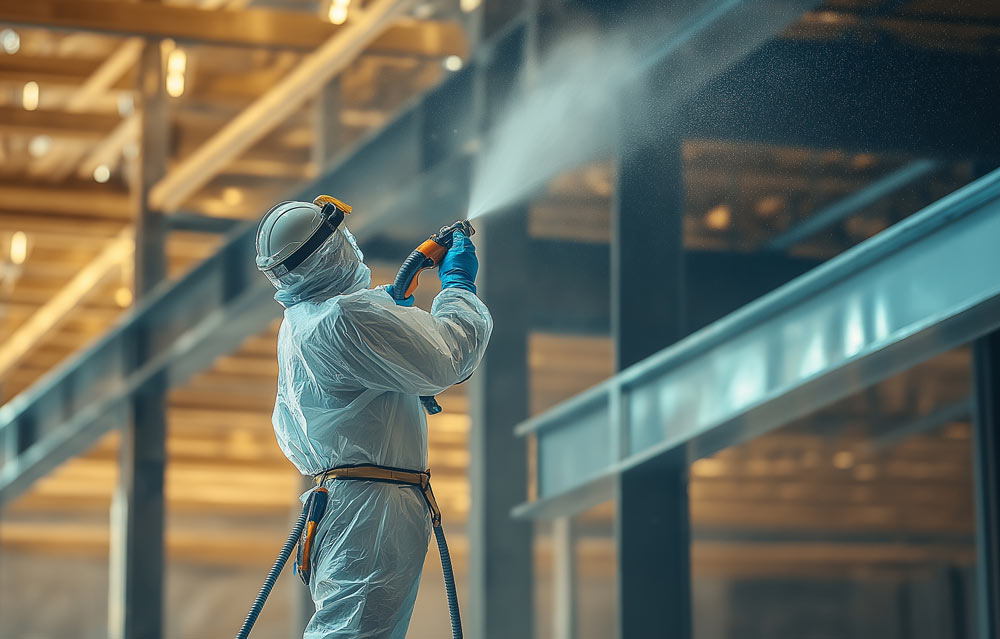
Structural steel is a cornerstone of modern architecture—strong, versatile, and capable of supporting vast loads across wide spans. But when exposed to extreme heat, such as during a fire, steel can quickly lose its strength and stability. This is where intumescent paint becomes a vital component of a building’s passive fire protection system. In this blog post, we explore how intumescent coatings work, why they’re used, and the benefits they offer in safeguarding structural steel during a fire.
Why Steel Needs Fire Protection
Steel begins to lose its structural integrity at around 550°C. In a typical fire scenario, temperatures can rise above 1,000°C, putting steel frameworks at serious risk of collapse in just minutes. Protecting steel from heat is therefore critical, not just for preserving the structure, but for allowing enough time for evacuation and firefighting efforts.
Fire protection for steel comes in various forms, including:
- Fire-rated boards
- Cementitious sprays
- Intumescent paint
Among these, intumescent paint is increasingly favoured for its performance, ease of application, and aesthetic flexibility.
What Is Intumescent Paint?
Intumescent paint is a specialist fire-resistant coating designed to react to high temperatures. When exposed to heat, it undergoes a chemical transformation that causes it to expand significantly, often up to 50 times its original thickness.
This expanded layer forms an insulating char that slows the transfer of heat to the steel beneath, delaying the temperature rise that would otherwise lead to structural failure.
There are two main types:
- Solvent-based intumescent paint – Ideal for off-site application and external use
- Water-based intumescent paint – Commonly used for on-site internal applications
Both types must be applied in line with manufacturers’ guidelines and tested standards to ensure they meet fire resistance requirements.
How Intumescent Paint Works
The magic of intumescent paint lies in its ability to transform under fire conditions. The process typically involves:
- Heat Exposure: As ambient temperatures rise above 200°C, the chemical components within the paint begin to react.
- Chemical Expansion: The paint softens and expands through a process called intumescence.
- Char Formation: A thick, carbonaceous foam layer (char) forms on the surface.
- Insulation: This char acts as a thermal barrier, dramatically slowing heat penetration to the steel.
This process can protect the steel for 30, 60, 90, or even 120 minutes, depending on the specification, giving building occupants time to evacuate and fire crews time to respond.
Advantages of Intumescent Paint for Structural Steel
1. Unobtrusive Appearance
Unlike bulky boards or cementitious sprays, intumescent coatings maintain the steel’s aesthetic. They are often used in exposed structures within offices, commercial units, retail spaces, and public buildings.
2. Flexible Application
Intumescent paint can be applied on- or off-site using spray, brush, or roller. This makes it ideal for both new builds and retrofit projects.
3. Lightweight
Coatings add minimal load to the structure, making them suitable for high-rise or long-span buildings where weight is a design consideration.
4. Durability and Protection
When combined with topcoats and primers, intumescent systems can also offer protection against corrosion and environmental wear.
5. Compliance and Certification
When applied correctly, intumescent coatings can help meet regulatory fire performance standards, reducing liability and ensuring safety.
Application Process: Key Considerations
Correct application of intumescent paint is crucial to its effectiveness. The process includes:
1. Surface Preparation
Steel surfaces must be clean, dry, and free from rust, grease, or previous coatings. A compatible primer is usually applied to promote adhesion and corrosion resistance.
2. Thickness Calculations
The required dry film thickness (DFT) is calculated based on:
- The steel’s profile (section factor)
- The required fire resistance duration (e.g., 60 minutes)
- Manufacturer specifications and test data
3. Application Method
Paint can be applied using an airless spray for large areas or a brush/roller for smaller or complex sections. Multiple coats may be required to reach the specified thickness.
4. Curing and Inspection
Once applied, the coating must be cured under the manufacturer’s conditions. Final inspections often include DFT measurements to ensure compliance.
5. Topcoats (If Required)
For durability and aesthetics, especially in exposed environments, a decorative or protective topcoat may be applied.
Standards and Certification
In the UK, intumescent coatings are tested to rigorous standards, including:
- BS 476-20/21: Fire resistance of loadbearing elements
- BS EN 13381-8: Fire resistance tests for structural members
Certification bodies such as Warringtonfire, BRE Global, or BM TRADA provide assurance that the products have been independently verified.
Third-party accreditation of both products and installers ensures that systems perform as expected in real fire scenarios.
Maintenance and Inspections
Intumescent coatings are low-maintenance but should still be included in routine fire safety inspections. Damaged or disturbed areas (e.g., from fixings, corrosion, or impact) should be repaired using approved materials and methods.
Annual visual checks and periodic compliance audits help maintain the integrity of the fire protection strategy.
Where Intumescent Paint Is Commonly Used
- Commercial office blocks with exposed steel structures
- Warehouses and logistics centres
- Airports and transport hubs
- Educational institutions
- Hospitals and healthcare facilities
- Sports venues and arenas
- Retail outlets and shopping centres
Anywhere structural steel is exposed or where architectural design calls for minimal disruption, intumescent coatings offer both safety and style.
The Role of Passive Fire Protection Specialists
Choosing the right intumescent paint, applying it correctly, and ensuring ongoing compliance is a specialist job. At Archway FPS, our team offers:
- Full specification support
- Accurate thickness calculations
- Professional application by trained operatives
- Final inspection and documentation
- Ongoing maintenance and remedial work
Our experience with passive fire protection ensures that your structural steel is not only protected but also fully compliant with all relevant regulations.
Conclusion: Protecting What Holds Everything Together
Structural steel may be the backbone of a building, but without proper protection, it is vulnerable in the very event it needs to withstand fire. Intumescent paint offers an elegant and highly effective solution, combining thermal protection, aesthetic freedom, and regulatory compliance.
By investing in the right fire protection systems and working with experienced professionals, you ensure that your structure—and everyone within it—stays safe when it matters most. For tailored guidance and certified intumescent paint application, contact Archway FPS today.


