
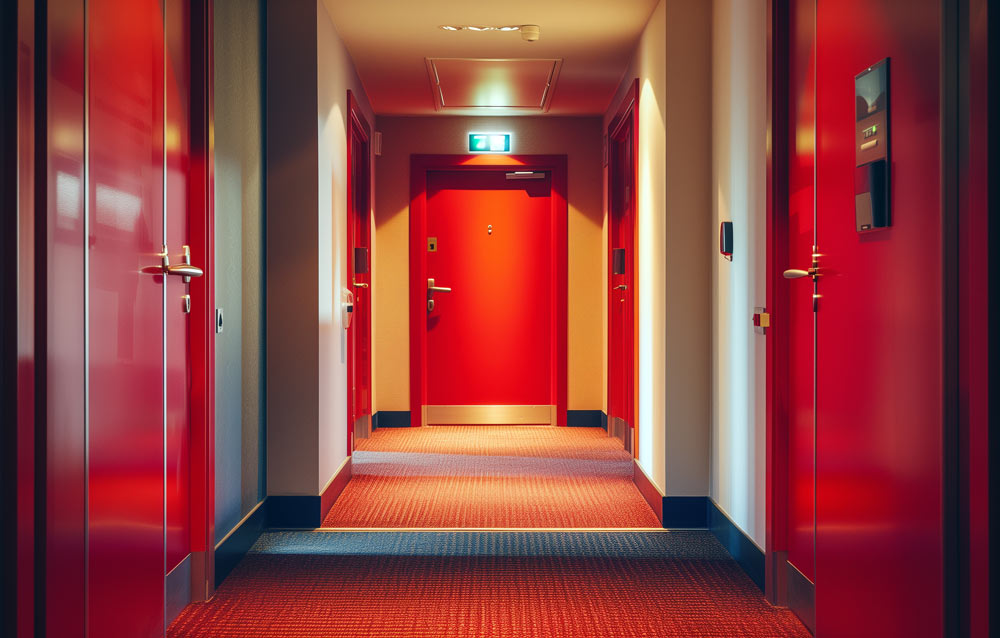
Fire safety is a crucial consideration in the design, construction, and ongoing use of any building. Among the many elements that contribute to passive fire protection, fire-rated doors and walls play a vital role in compartmentalising space, preventing the spread of fire, and protecting lives and property. In this blog post, we will explore what fire ratings mean, how they are determined, the differences between door and wall ratings, and why compliance with these standards is essential.
What Is a Fire Rating?
A fire rating, also known as a fire resistance rating, is a classification assigned to a building component (such as a door or wall) based on its ability to withstand fire exposure for a specific period of time. Ratings are typically measured in minutes—commonly 30, 60, 90, 120, or 240 minutes—and indicate how long a component can contain a fire, maintain structural integrity, and, in some cases, remain thermally insulated.
These ratings are derived from standardised fire resistance tests performed under controlled conditions in accordance with recognised standards, such as BS 476 (UK) or EN 1363-1 (Europe).
Why Fire Ratings Matter
Fire ratings are not merely technical specifications—they directly impact the safety of building occupants and the integrity of escape routes during a fire. The longer a door or wall can resist fire, the more time people have to evacuate and for emergency services to respond. Fire-rated components also help to:
- Control fire spread between rooms and compartments
- Protect escape routes such as corridors and stairwells
- Limit smoke and toxic gas migration
- Reduce structural damage to the building
- Meet legal and insurance requirements
Understanding Fire-Rated Doors
Fire-rated doors are designed to close automatically in the event of a fire and form a barrier to flames, smoke, and heat. These doors are tested as complete assemblies—including the leaf, frame, glazing, seals, and hardware—since performance depends on the system as a whole.
Common Fire Door Ratings:
- FD30 – 30-minute fire resistance
- FD60 – 60-minute fire resistance
- FD90 and FD120 – Less common, for high-risk areas
Key Features of Fire Doors:
- Intumescent strips that expand under heat to seal gaps
- Smoke seals to block smoke ingress
- Automatic closing devices
- Fire-rated glazing, if present, with tested framing
- Certificated ironmongery, such as hinges and latches
Proper installation and ongoing maintenance are critical—any alteration or damage can compromise a door’s fire performance.
Understanding Fire-Rated Walls
Walls with fire resistance ratings are designed to compartmentalise spaces and prevent the fire from spreading horizontally and vertically. They form part of a building’s passive fire protection system and often work in conjunction with fire doors, ceilings, and floors.
Typical Wall Ratings:
- 30 minutes – Internal partition walls in low-risk areas
- 60 minutes – Common in corridors and fire escapes
- 120+ minutes – Used in high-risk areas like plant rooms
Fire-rated walls must be built from approved materials (e.g., fire-rated plasterboard, blockwork, or concrete) and must be constructed to exacting specifications. Penetrations for cables or ducts must be properly sealed using tested fire-stopping methods.
How Fire Ratings Are Determined
Both doors and walls are tested in accredited laboratories using standard procedures. The most relevant UK and European standards include:
- BS 476-22: Methods for determination of fire resistance of non-loadbearing elements
- BS EN 1364: Fire resistance tests for non-loadbearing elements
- BS EN 1634-1: Fire resistance testing of door and shutter assemblies
These tests measure:
- Integrity – How long the element prevents fire and hot gases from passing through
- Insulation – How well it limits the temperature rise on the non-fire side
- Stability – For load-bearing walls, the ability to carry loads during fire exposure
Certified fire-rated components receive documentation from recognised bodies (e.g., BM TRADA, Warringtonfire) indicating their compliance.
Fire Compartmentation and Building Regulations
In the UK, fire compartmentation is a key concept within Building Regulations Approved Document B. Buildings are divided into compartments using fire-rated walls, floors, and doors to slow the spread of fire and protect critical areas like:
- Escape routes and stairwells
- Plant rooms and riser cupboards
- Storage areas for hazardous materials
- Residential corridors and communal spaces
Each compartment must meet minimum fire resistance standards appropriate to its use, size, and occupancy level. Non-compliance can result in prosecution, fines, and invalid insurance in the event of a fire.
Installation and Certification Considerations
It’s not enough to simply purchase fire-rated products. To ensure fire performance:
- Installation must be carried out by competent professionals with third-party accreditation
- Penetrations (e.g., cables or pipes) must be sealed using approved fire-stopping products
- Regular inspections should be performed to check for wear, damage, or unauthorised modifications
- Certification labels should remain intact and visible on fire doors
Improper installation or missing certification can void the fire rating, making the system ineffective in an emergency.
The Role of Passive Fire Protection Specialists
Passive fire protection is a specialist area that requires knowledge, skill, and experience. Companies like Archway FPS offer comprehensive services to ensure your doors, walls, partitions, and other fire-rated systems are correctly specified, installed, and maintained.
This includes:
- Fire compliance inspections
- Intumescent paint and coatings
- Joinery and glazing solutions for fire doors
- Partitioning systems with rated performance
- Remedial work and upgrading existing systems
Working with qualified professionals helps ensure your building is safe, legally compliant, and fully protected.
Conclusion
Understanding the fire rating of doors and walls is fundamental to creating safe, compliant buildings. These components form the backbone of passive fire protection systems that save lives and reduce property damage. Fire-rated doors and walls must be carefully selected, installed, and maintained according to current standards, and supported by accurate documentation.
Whether you’re designing a new build or assessing an existing property, fire safety should never be left to chance. For expert advice, inspections, and installation, contact Archway FPS—your trusted partner in passive fire protection.


